Tribble
The RFP platform that gets measurably better with every deal you run. No answer library to maintain. No knowledge lost to turnover.
(0)
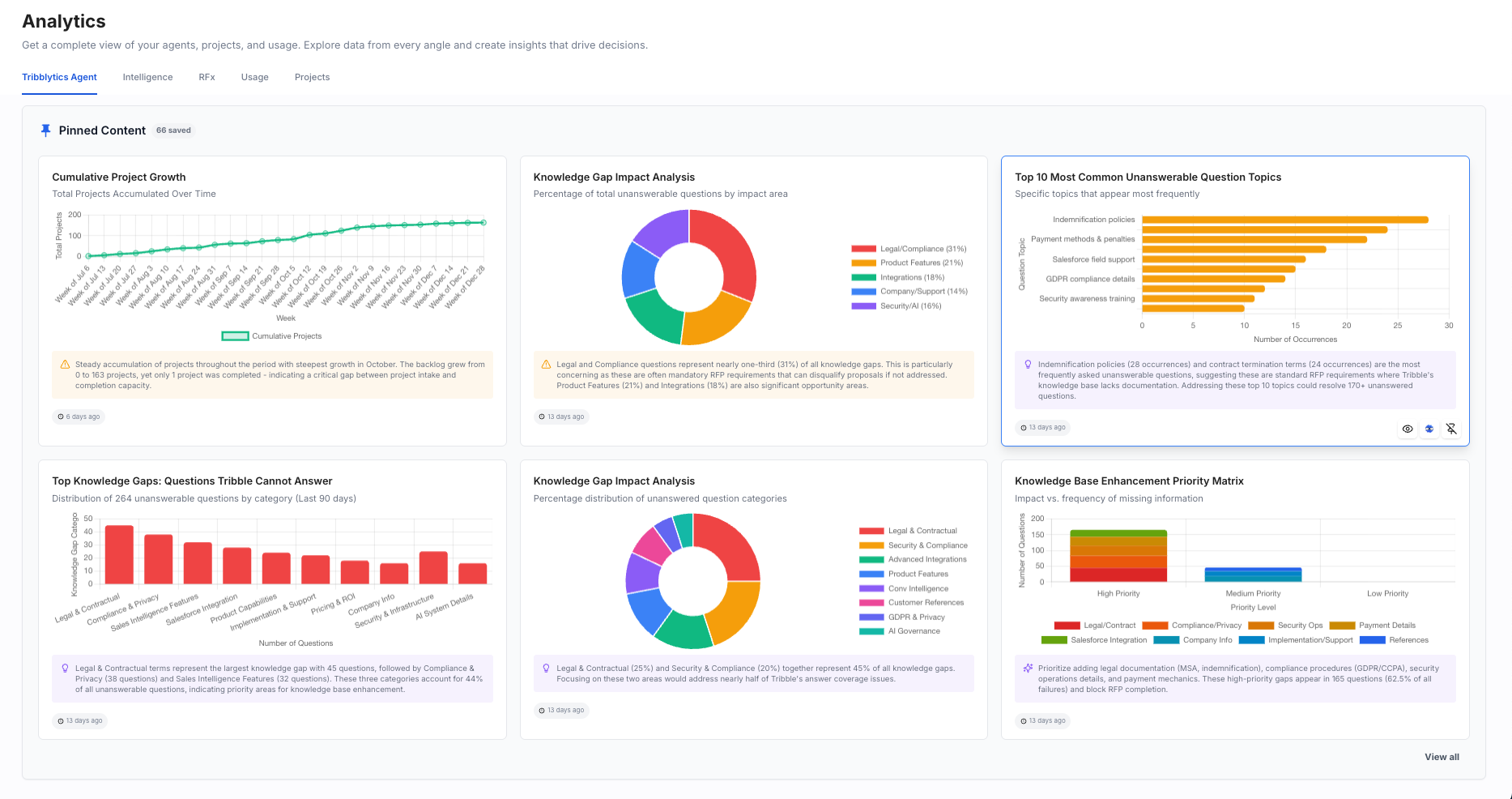
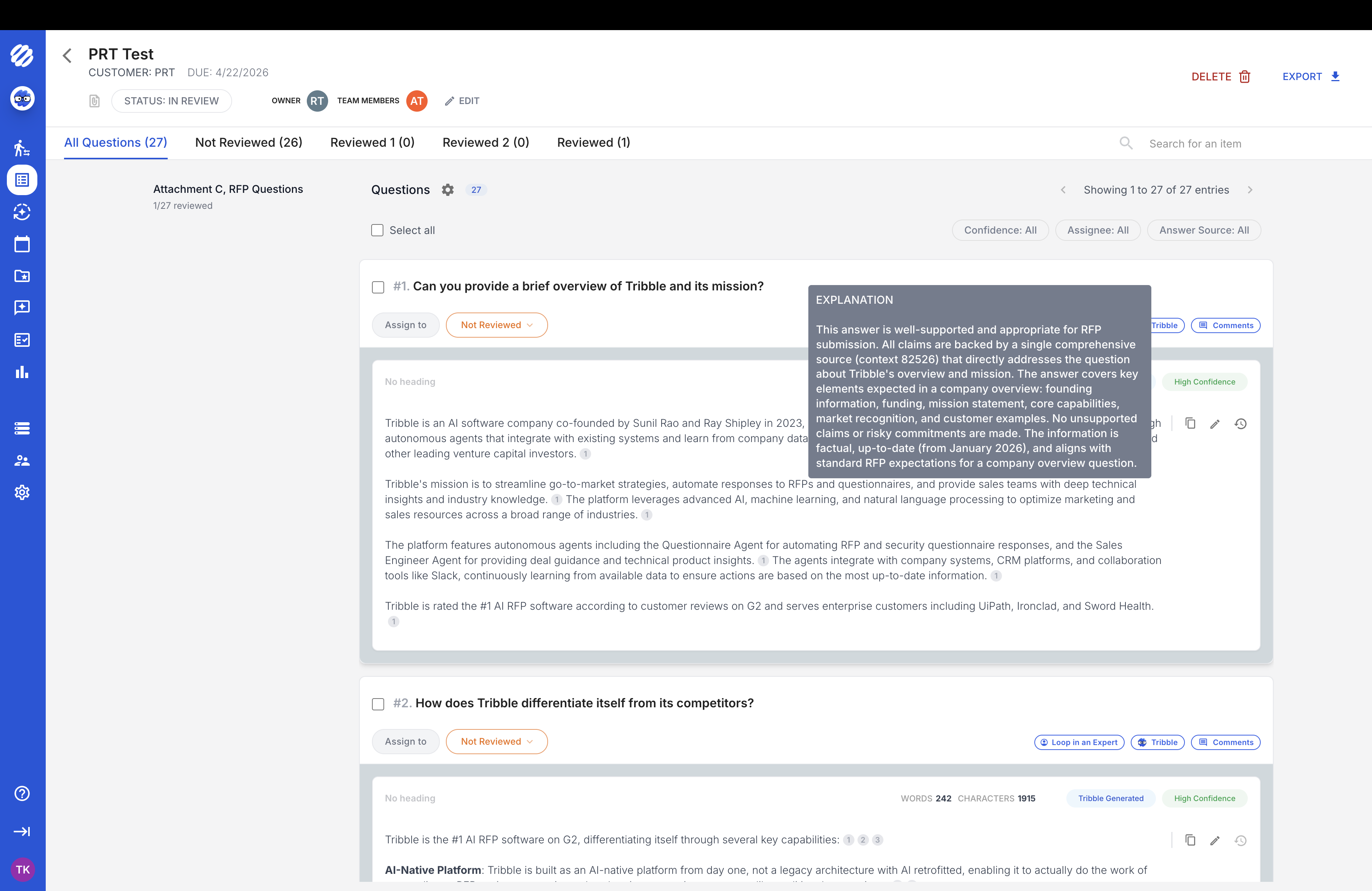
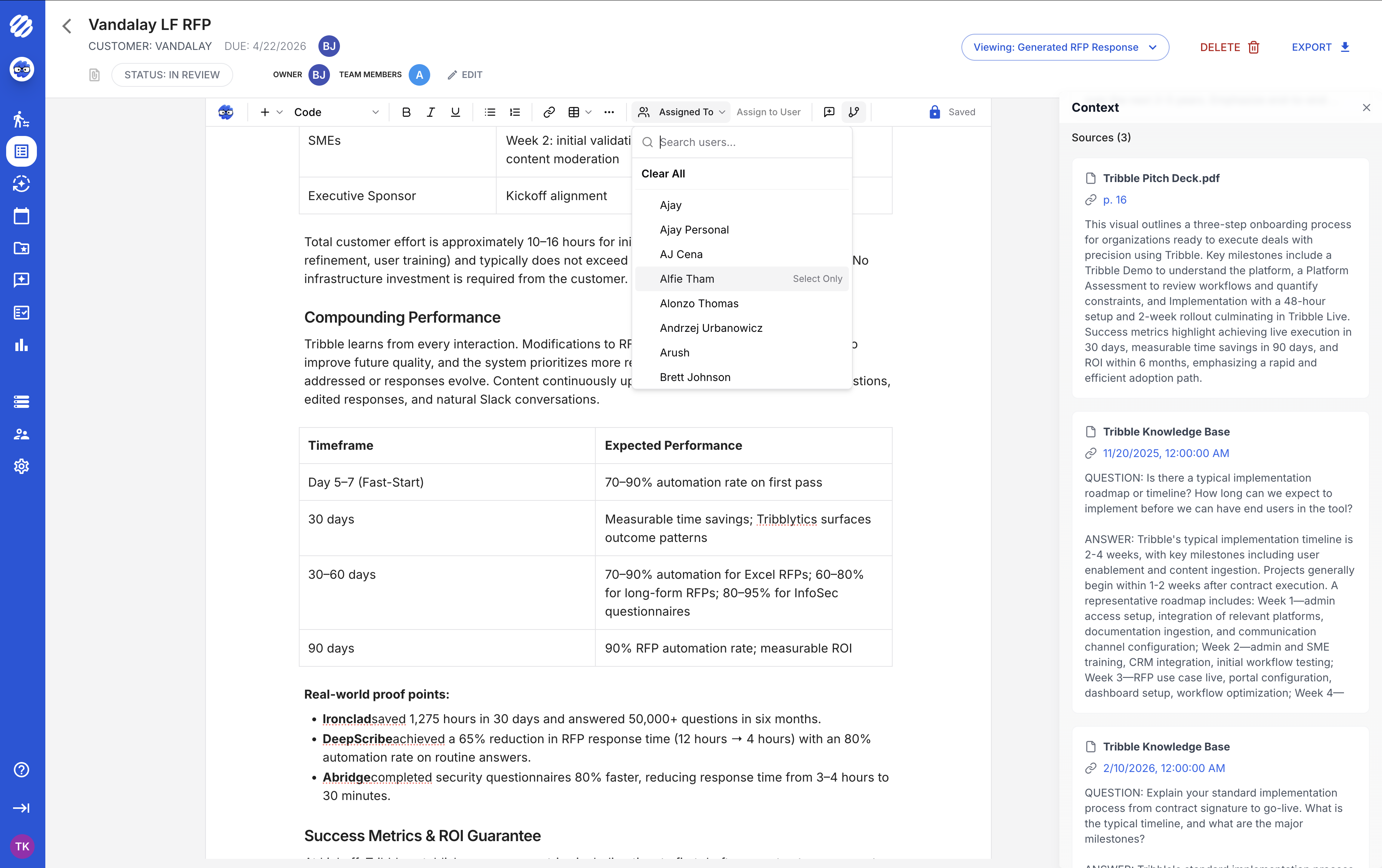
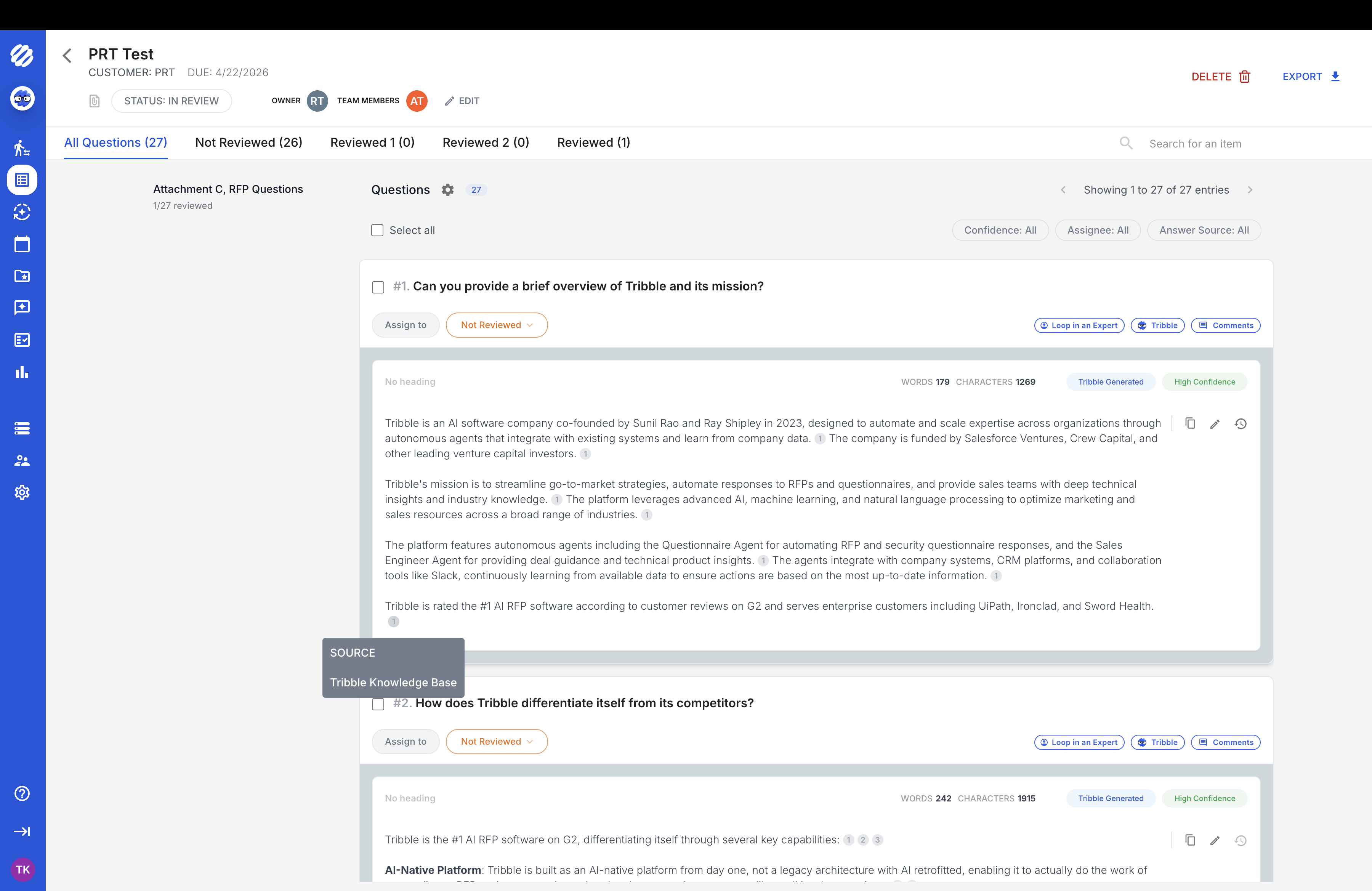
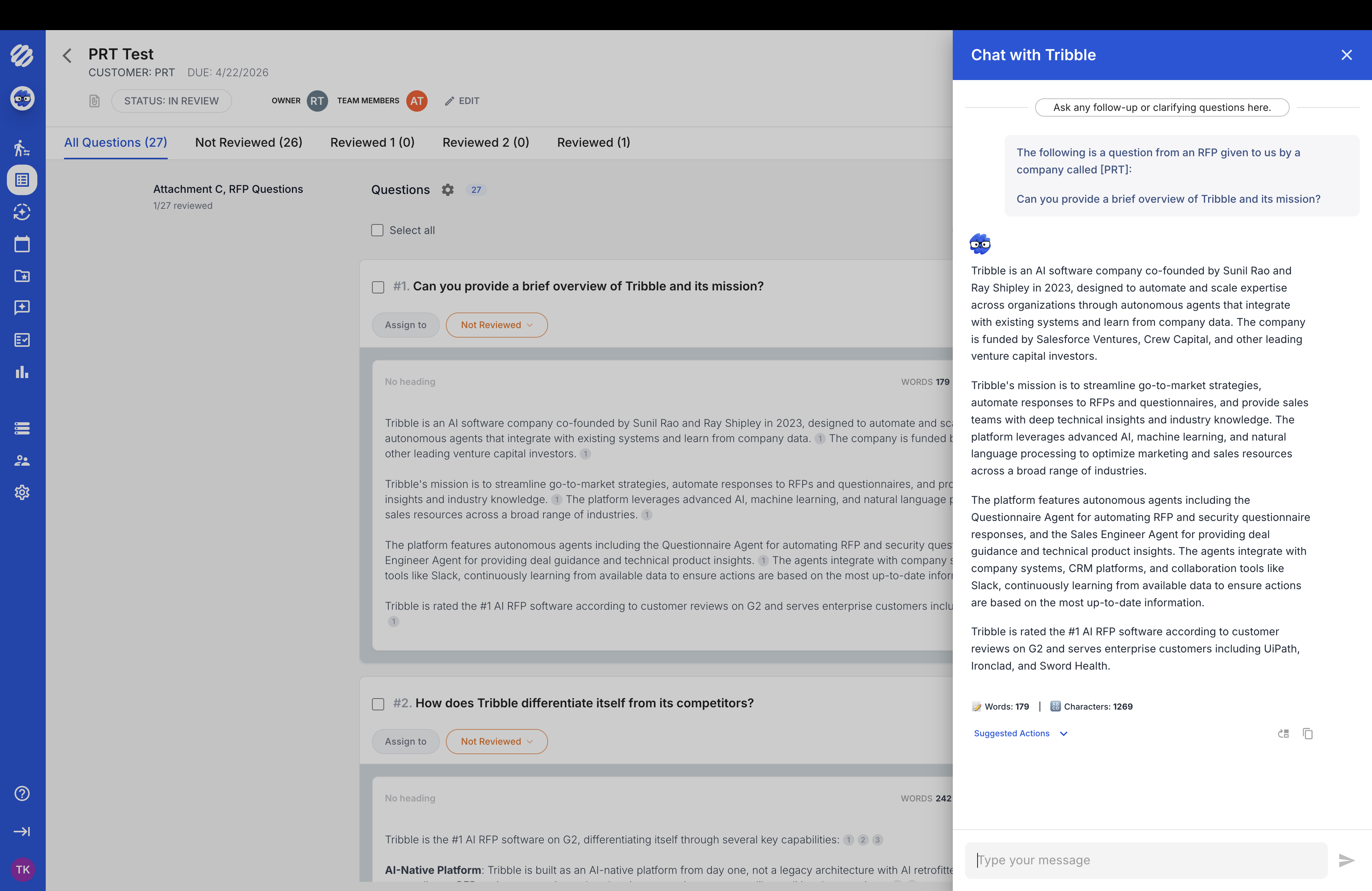
Most RFP tools force teams to build and maintain a static answer library that goes stale the moment someone forgets to update it. Tribble skips that step entirely. It generates scored, cited responses from a living knowledge graph, routes hard questions to the right expert through Slack or Teams, and tracks which proposals actually win. Every outcome feeds back in. The result: your 200th proposal carries intelligence your first one never had.
Features & Capabilities
Why Choose Us
Answer libraries decay. Tribble compounds. The platform records which responses win deals, which content gaps cost you, and which experts produce the highest-converting answers. That data feeds every future draft. Teams using legacy tools start from the same baseline on proposal 500 as they did on proposal one. Tribble teams widen their win rate advantage with every deal they close.
Customer Reviews & Ratings
No reviews available.
Success Stories
TRM Labs
TRM Labs processes over 200 RFPs per year with the same team size. Tribble reduced their response time from 11-12 working days to 8-9.
Rydoo
Rydoo cut SOC 2 questionnaire completion from 3-4 hours of engineering time to under 30 minutes using Tribble.
Abridge
Abridge achieved 80% faster completion times on security and compliance questionnaires.
UiPath
UiPath automated the equivalent of five full-time employees' RFP workload without hiring new staff.
Abridge
Before Tribble, Abridge's team spent 12–15 hours a week stitching security questionnaire answers together across Notion, Drive, and Slack. With Tribble's unified, source-backed knowledge base, 85% is auto-handled — 3–4 hrs to 30 min, ramp 50% faster.
Pricing Plans
Contact vendor
- Credit-based (RFX packs)
- 2-3 workflows
- Up to 2 primary systems
- 30-day concierge deployment with Field AI Engineers
Contact vendor
- Adds Gong, Salesforce/HubSpot, enablement content, and customer success data
- Scale orchestration across teams with approvals and audit
Contact vendor
- Custom surfaces
- Enterprise security
- Volume pricing
- Ongoing workflow expansion
Integration Ecosystem
Security & Compliance
Certifications
- SOC 2 Type II
Compliance
- Zero External AI Training
- Full audit trails and source provenance
- Configurable approval workflows
- Permission inheritance from connected systems
Supported Languages
Related Content
August 19, 2026
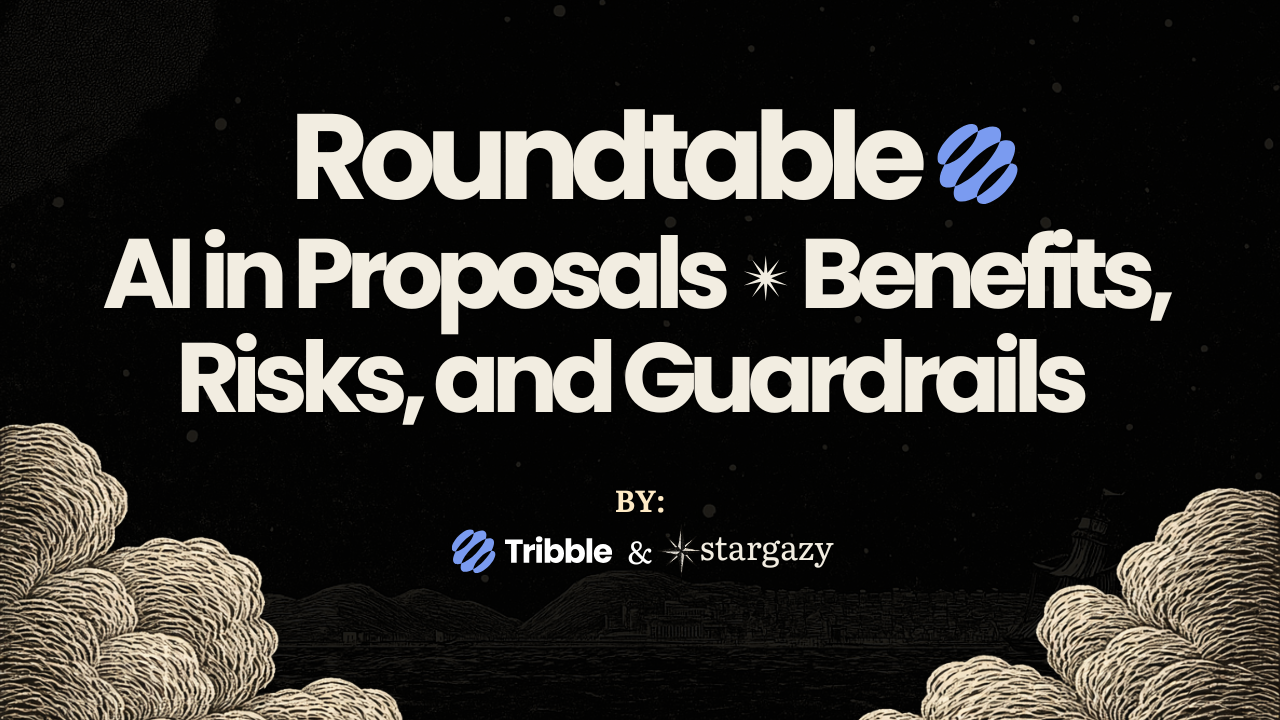
A closed-door, 60-minute roundtable for 12 proposal and bid leaders on where AI is genuinely helping, where it is creating risk, and what guardrails teams have actually put in place. 19 August 2026.

July 7, 2026
Tribble CEO Sunil Rao on the slop era, deal intelligence, and why winning, not speed, is now the question proposal AI has to answer. In his words.

May 19, 2026
A live conversation with Melissa from Tribble, Kristina Nolan from HubSpot, and stargazy founder Chris Carter on how the proposal team role is changing, where it sits in the new sales motion, and what AI is actually making possible today.
Frequently Asked Questions
What is Tribble?
Tribble is an AI-native platform that automates RFP responses, security questionnaires, and DDQs for enterprise sales teams. The system generates scored first drafts from your organizational knowledge, routes questions to the right experts through Slack and Teams, and tracks which proposals win to improve future responses.
How long does it take to set up Tribble?
48 hours to first live RFP. Upload 5-10 past RFPs to seed the knowledge base, connect your integrations, and start generating. A concierge team of Field AI Engineers handles deployment.
Is Tribble safe to use with confidential information?
Tribble holds SOC 2 Type II certification. The platform uses zero customer data to train shared AI models. Every response includes source attribution and full audit trails, and configurable approval workflows enforce governance at every step.
What makes Tribble different from other RFP tools?
Legacy tools require teams to maintain static answer libraries. Tribble generates responses from a living knowledge graph that updates in real time from connected systems. Every deal outcome feeds back into the intelligence layer, so the 500th proposal carries the weight of every win before it. The platform also extends beyond RFPs into call intelligence and win/loss analytics.
Who is Tribble built for?
B2B teams in regulated industries handling 20+ RFPs or security questionnaires per quarter. Healthcare IT, financial services, government, and cybersecurity teams see the biggest impact. Current customers include Salesforce, UiPath, Sprout Social, and TRM Labs.
What formats does Tribble support?
Tribble imports RFPs in XLSX, DOCX, and PDF formats. A browser extension captures directly from procurement portals including Ariba, Coupa, WHISTIC, and OneTrust. Responses export in the original format.
How does Tribble's Slack agent actually work inside a live deal cycle?
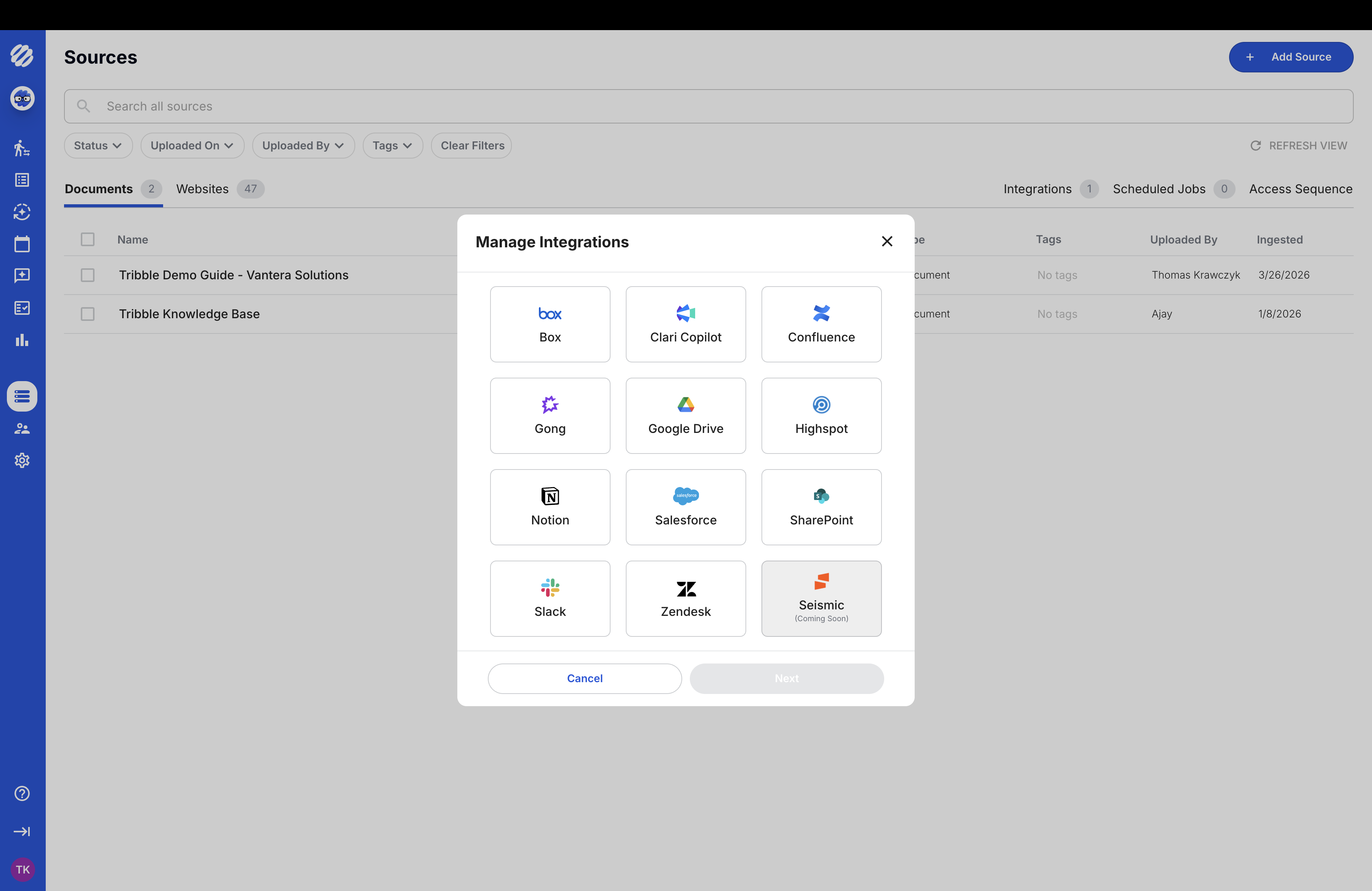
When a prospect asks a technical question in a Slack Connect channel, a rep @mentions Tribble and gets a cited answer back in seconds — pulled live from 15+ connected sources like Salesforce, Google Drive, Confluence, Notion, and proposal libraries, rather than a static Q&A library that goes stale. In internal channels, the agent can also auto-reply, though it waits 60 seconds for a human response first so it supplements your SMEs rather than cutting them out. Teams can upload whole RFPs or security questionnaires to Slack and have Tribble draft them end-to-end from the same knowledge base. Every answer arrives with source citations and a last-updated date so reps can verify before sending to a prospect.
How is this different from a standard Slack bot or a ChatGPT app, and how do you stop it from hallucinating?
Traditional Slack bots follow pre-programmed rules and return fixed outputs; generic AI apps draft plausible-sounding answers with no grounding. Tribble's agent uses retrieval-augmented generation against your live, verified sources, so every response is tied to a specific document — which is what meaningfully reduces hallucination. A confidence score acts as a safety layer: if the agent isn't certain, the question auto-routes to the right SME with the original prompt, the attempted answer, and full channel context. The SME's reply is then captured and indexed, so accuracy improves automatically with every exchange, and Tribblytics tracks which answers ended up in won deals, closing the loop.