Responsive
Enterprise response management that keeps RFP, DDQ and security questionnaire answers governed in one library
(0)
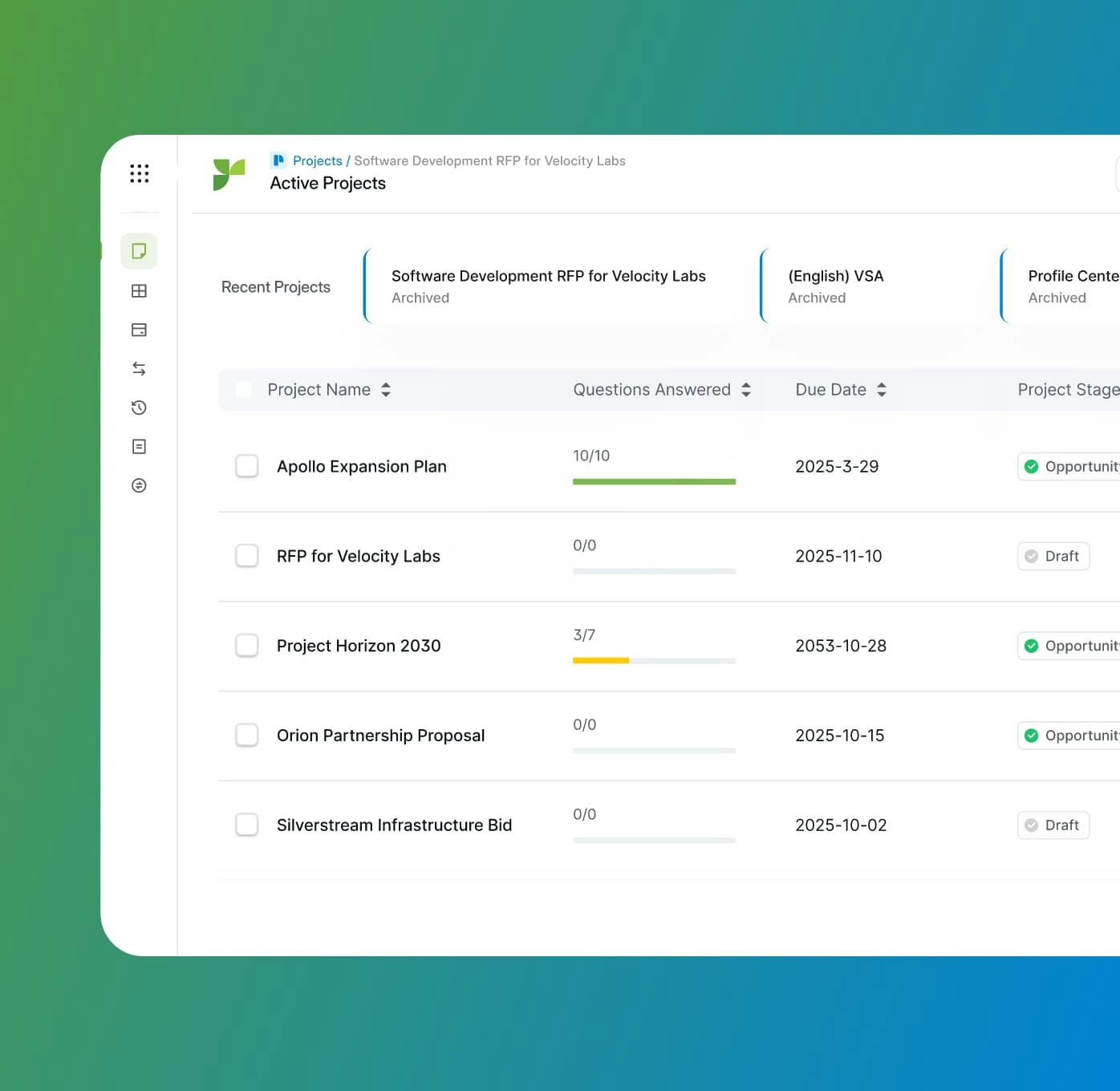
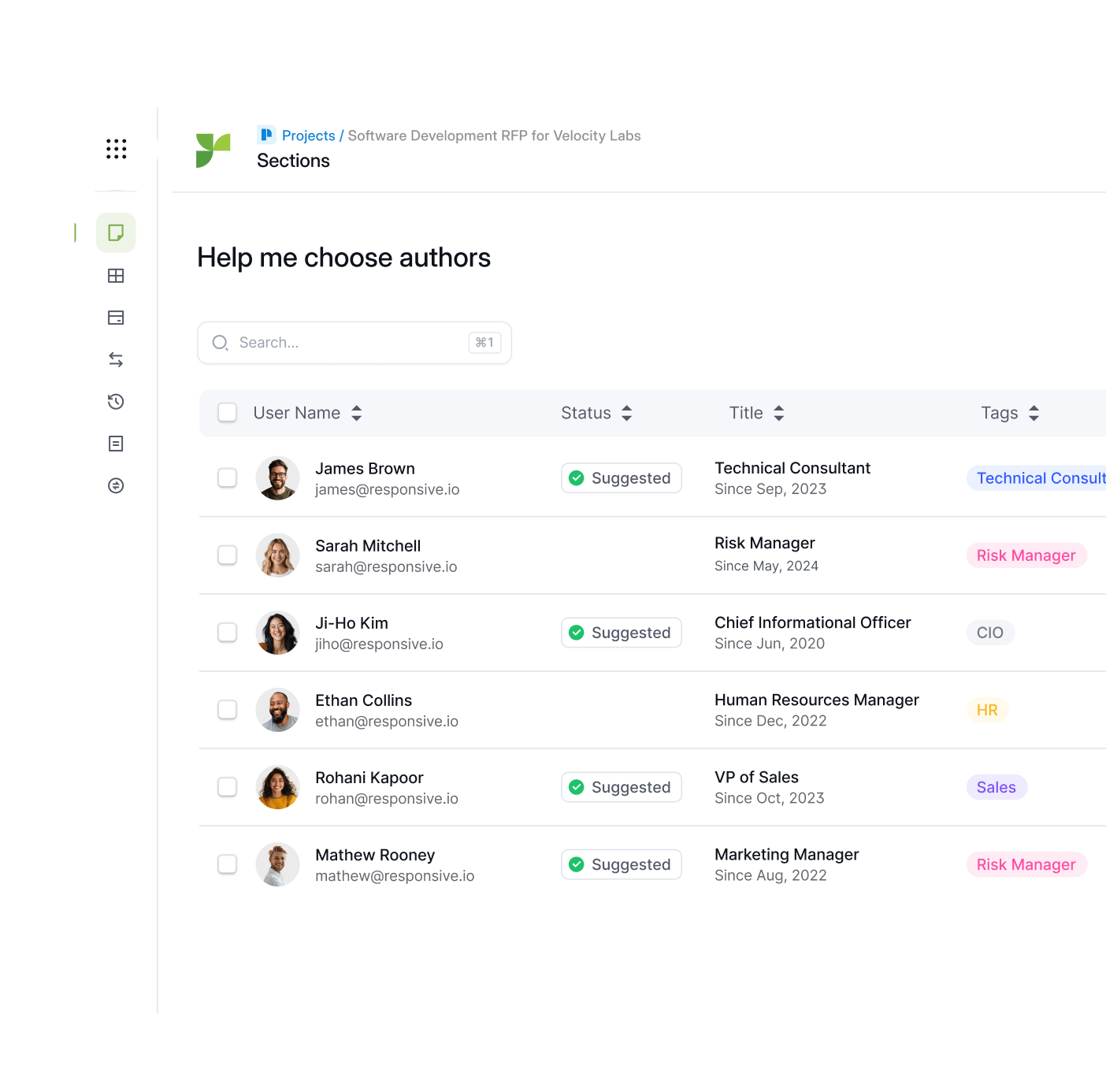
Large organisations answer the same questions again and again across RFPs, DDQs and security questionnaires, with the knowledge scattered across sales, security and subject-matter experts. Responsive (formerly RFPIO) centralises it in one governed content library, imports questionnaires in their original format, drafts first answers from approved content and routes them through assignment and review. A buy-side module issues and scores RFPs.
Features & Capabilities
Why Choose Us
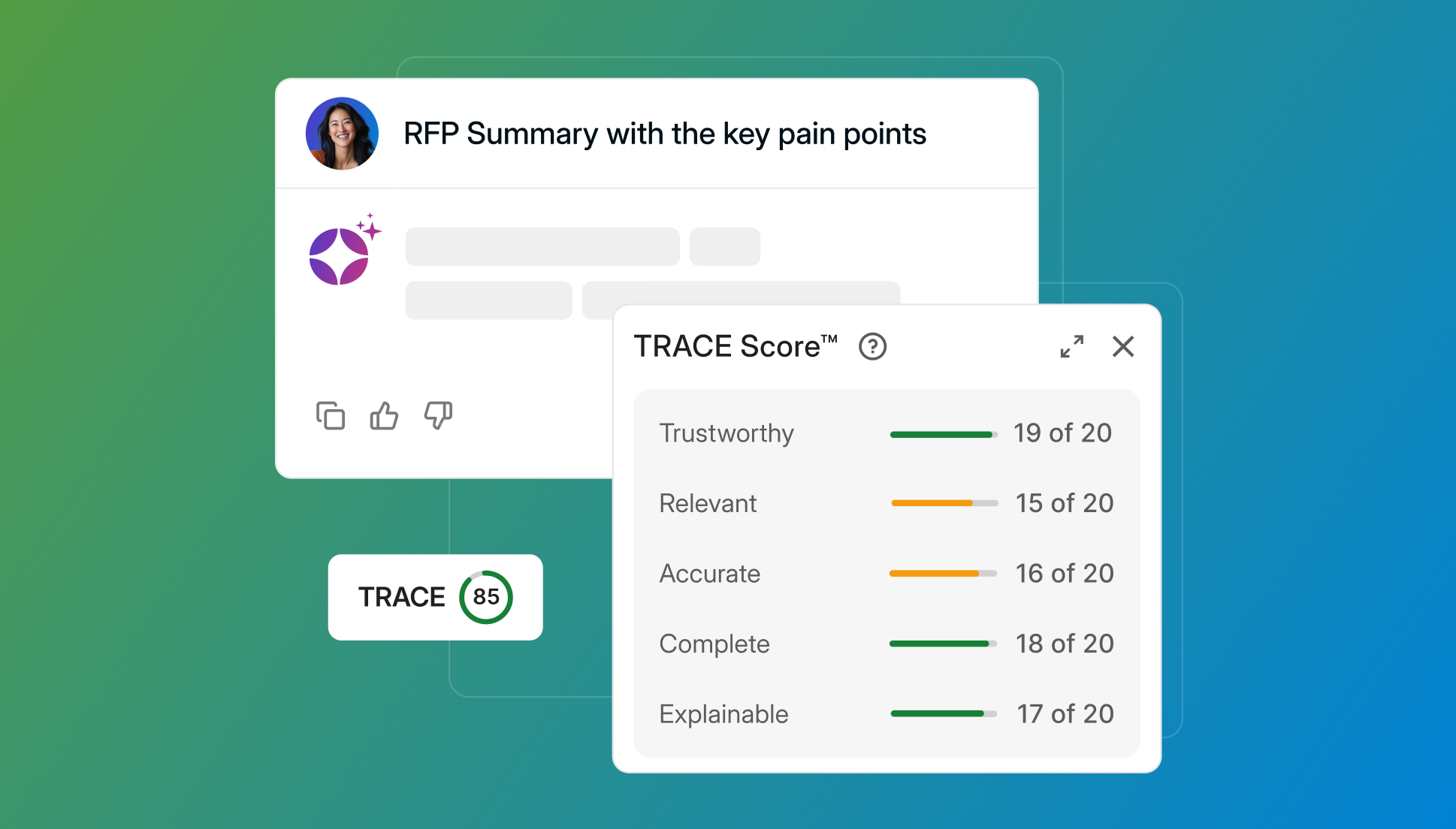
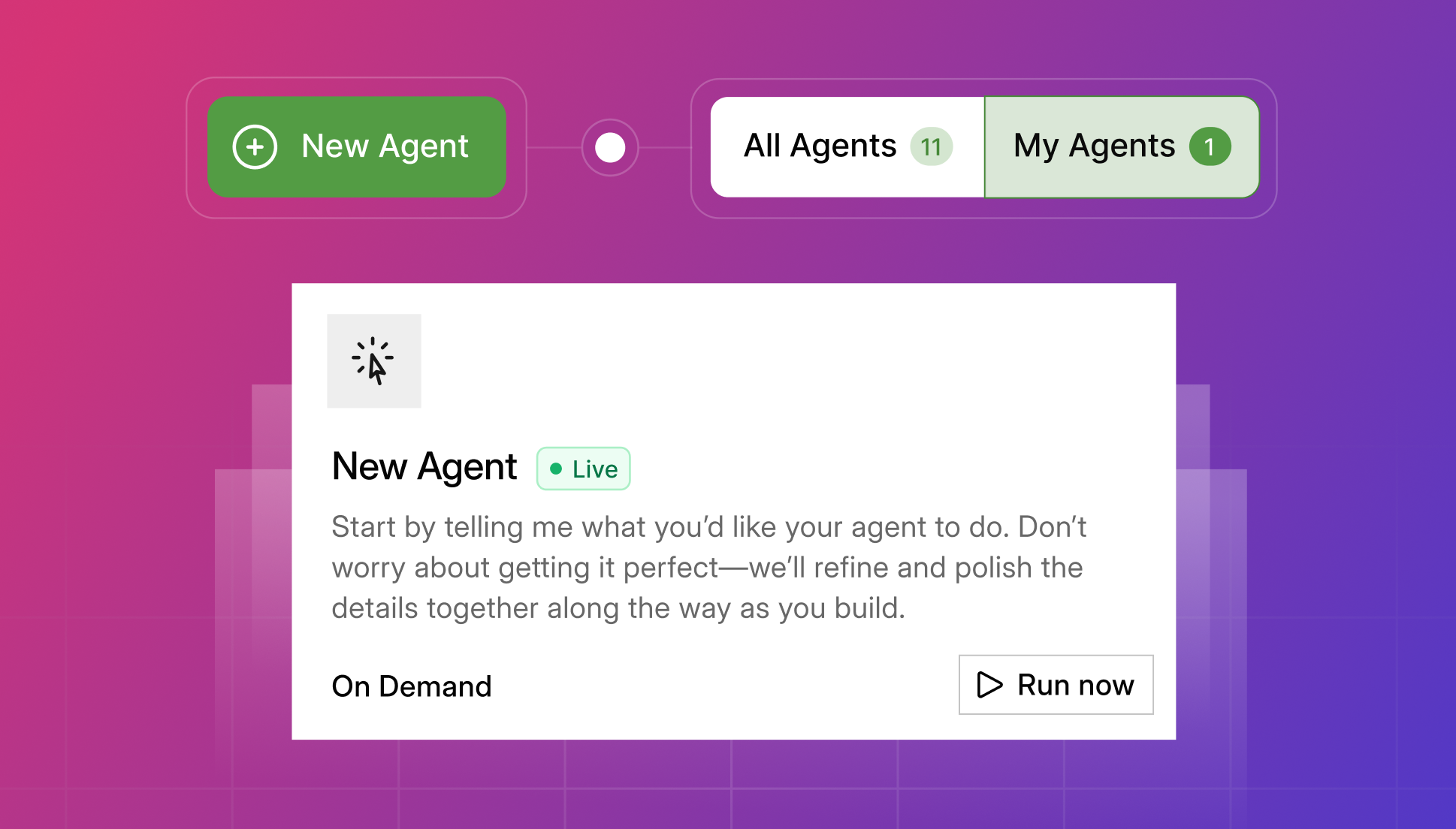
Responsive's case is breadth plus governance. TRACE Score checks each AI answer against defined guidelines and flags weak sourcing, verbatim flags lock approved wording, and Agent Studio lets admins build scheduled agents for library clean-up. The same content then flows outward: a buyer-facing Trust Center, autofill into Whistic, OneTrust and Coupa portals, and an MCP server into ChatGPT, Copilot and Claude. It is ISO 42001 certified.
Customer Reviews & Ratings
No reviews available.
Success Stories
Five9
Five9 competed for 104% more RFxs after rolling Responsive AI out to 380+ users across a 6,500+ Q&A library, and exports proposals in Spanish, Portuguese, Canadian French and German.
BlackLine
BlackLine generates 74% of answers with AI and reports a 50% win rate, while its Trust Center has logged 11,000 views and 15,500+ document downloads.
EXL
EXL reduced time spent per RFP by 74% and submits responses 36% faster.
Pricing Plans
Starting from $10,000
- Unlimited Response Projects
- AI & automation studio
- Unlimited content & collaboration
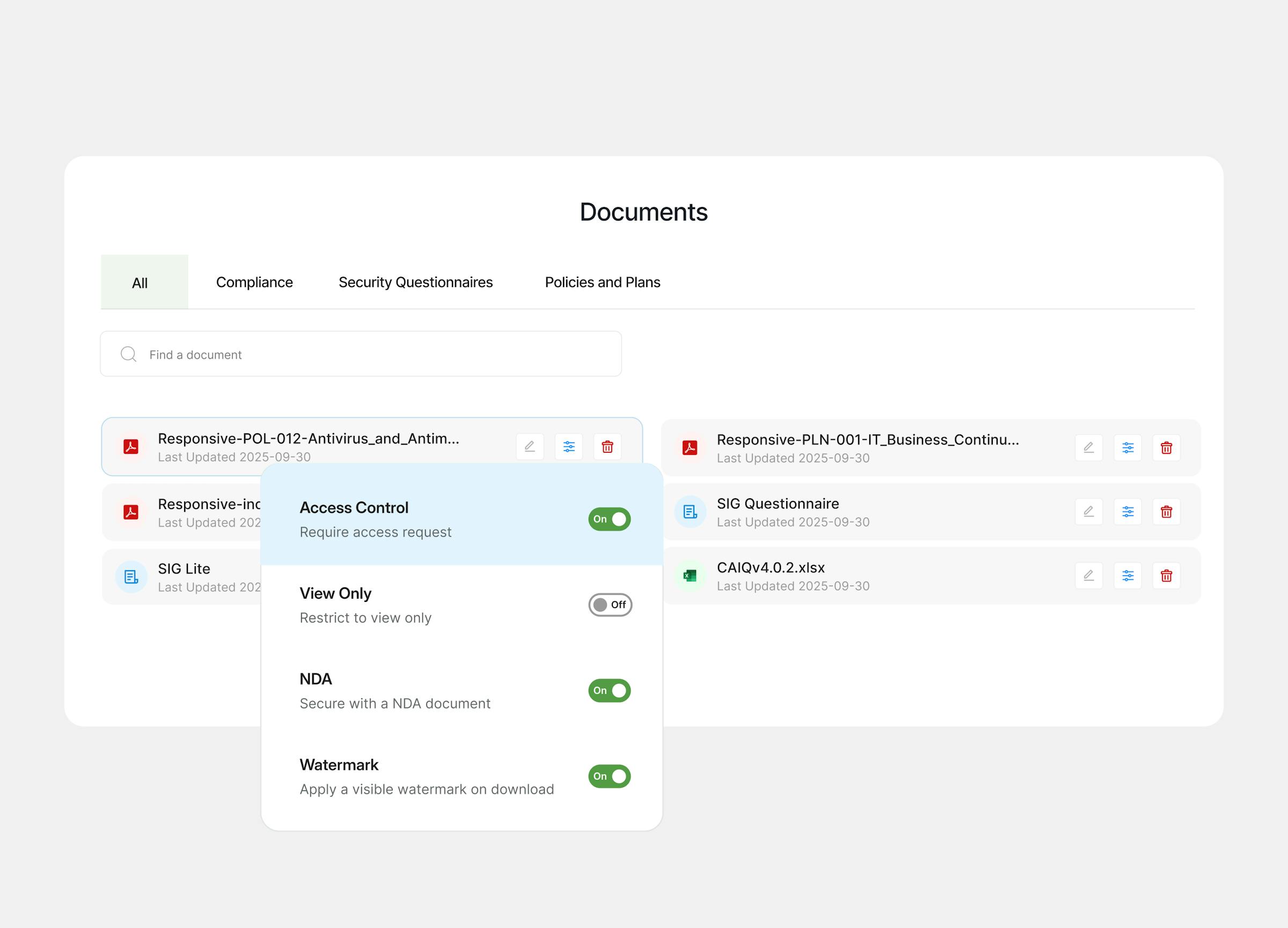
- Integrations & access control
- Admin, reporting, & support
Contact for pricing
- Everything in Emerging
- Intake Request
- LookUp & eSignature
- Advanced integrations
- Advanced access controls
- Premium deployment & support
- Flexible hosting options
Contact for pricing
- Everything in Growth
- Flexible custom AI
- Enterprise security & controls
- Advanced reporting
- Premium connectors
Integration Ecosystem
Security & Compliance
Certifications
- SOC 2 Type II
- ISO 27001:2022
- ISO 27701
- ISO 42001
- CSA STAR Level 1
Compliance
- GDPR Compliant
- EU/UK SCCs
- UK Data Protection Act 2018
- CCPA
- Zero External AI Training
- Choice of hosting region (US, CA, UK, AU, SG, EU)
Supported Languages
Frequently Asked Questions
What is Responsive?
Responsive, known as RFPIO until its 2023 rebrand, is a response management platform for teams that answer RFPs, RFIs, DDQs and security questionnaires at volume. It keeps approved answers in a central content library, imports questionnaires in their original Word, Excel or PDF format, drafts first answers with AI and manages assignment, review and export. It also has a buy-side module for issuing and scoring RFPs.
How does Responsive protect confidential data and handle AI?
Responsive is audited annually for SOC 2 Type 2 and holds ISO 27001:2022, and it states ISO 27701 and ISO 42001 (AI management) certification. Its AI terms commit not to train models on customer data, except anonymised data where a customer gives feedback or explicit permission. Customers choose a hosting region from the US, Canada, UK, Australia, Singapore or EU. Optional AI services, including OpenAI, run in the US. It holds no FedRAMP authorisation.
What makes Responsive different from other RFP tools?
Mainly breadth and governance. TRACE Score rates every AI-drafted answer for accuracy and traceability, verbatim flags lock approved wording, and Agent Studio lets admins build their own scheduled agents for library upkeep. The same content is also used outside the tool: in a buyer-facing Trust Center, auto-filled into supplier portals such as Whistic, OneTrust and Coupa, and available in ChatGPT, Copilot and Claude through an MCP server.
Who is Responsive best suited to?
Mid-market and enterprise teams handling a high, mixed volume of RFPs, DDQs and security questionnaires, with someone who can own the content library. Published pricing starts from $10,000 for the entry edition, and G2 reviewers report about two months to implement. Reviewers praise support but often mention a learning curve and say AI drafts and library search need tuning, so smaller teams should weigh the admin effort.
How much of the bid lifecycle does Responsive cover?
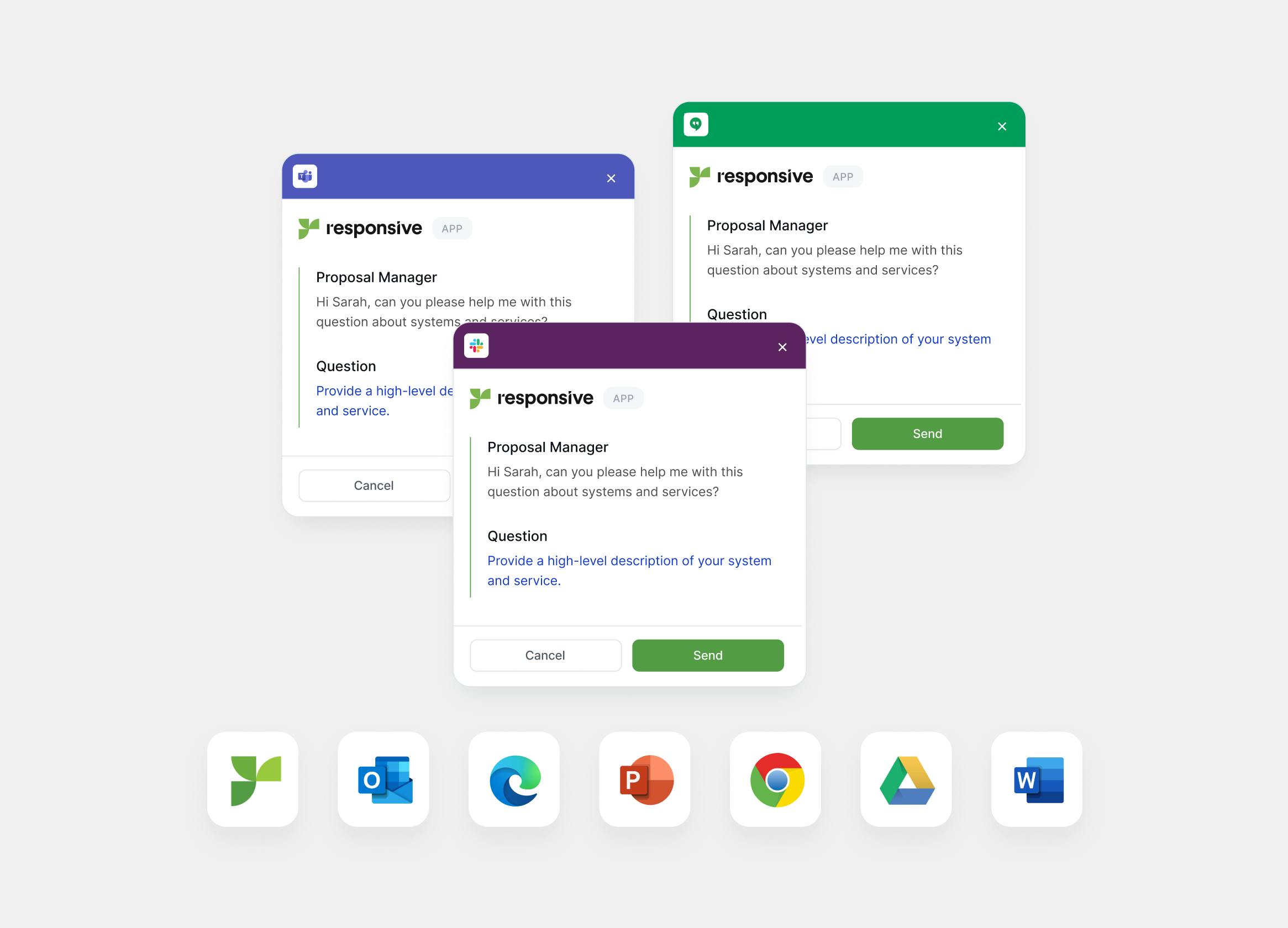
From the moment an RFP arrives to submission. Requirements Analysis summarises and shreds the document, and fit analysis supports the go/no-go call. Response Projects handles drafting, assignment, review and formatted export, and LookUp brings approved answers into Word, Outlook, Slack and Teams afterwards. It doesn't find or monitor opportunities, and it isn't a capture or pipeline tool.